Why a drain can be blocked without looking blocked
A drain needs three things to work: a clear pipe, a trap and a vent that lets air in behind the water. If any of them is partly blocked, water slows down even when the sink looks fine.
Grease that lines the pipe wall narrows the passage without closing it. Water still gets through, but slowly, and the sink drains with a gurgle.
Four causes to check, in order
Trap or pop-up stopper
Hair, soap scum and debris collect at the stopper and the P-trap. Remove and clean both.
Partial grease or soap buildup
A film narrows the pipe. Hot water helps a little and a cable clears it.
Blocked vent
A vent stack on the roof can clog with leaves or a bird nest. The drain gurgles and slows.
Main line partial blockage
If other drains are slow or a toilet gurgles when the sink drains, the problem is in the main.
A simple diagnosis you can do
Check the other fixtures
Run the tub, other sinks and flush a toilet. If more than one is slow, the problem is downstream.
Listen for gurgling
Gurgling in one fixture when another drains points to the vent or the main.
Clean the trap
Place a bucket, unscrew the trap and clear it. Reassemble and test.
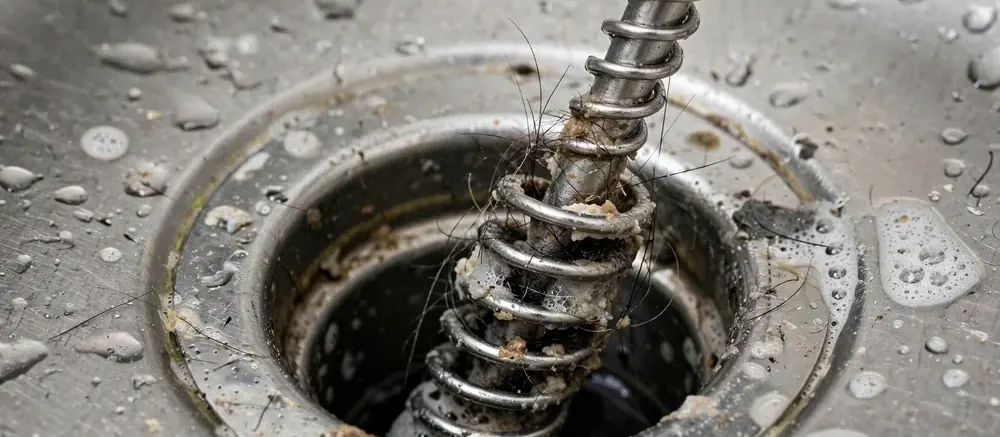
Try a hand auger
Feed it into the drain past the trap and pull out the debris.
Stop there
If it is still slow, stop using chemical cleaners and call a plumber.
Why not to pour drain cleaner
Liquid drain openers can sit in a partly blocked pipe and damage older metal and plastic. If the clog does not clear, the water in the sink is now hazardous for the plumber who must open it.
A cable or a camera is a better next step. Our drain cleaning page describes how we clear lines, and sewer inspection covers what a camera shows.
When it is the main line
A basement floor drain that gurgles when a sink runs, or a toilet that bubbles, suggests the main line is partly blocked. Roots, grease and offset joints are common causes.
A camera tells us what and where. The City's construction detail sheet treats the sewer service line as the owner's responsibility, so findings matter.
Kitchen sink versus bathroom sink
A kitchen sink usually slows from grease and food film, and a disposal can mask it. A bathroom sink usually slows from hair and soap at the stopper and the trap.
That is why the first step differs. Clean the stopper in a bathroom sink. In a kitchen, run hot water with a little dish soap, then check whether the disposal side or the other side drains better.
Vents and why they matter
Every drain has a vent that lets air in behind the water. Without it, a drain slows and gurgles because the water cannot flow freely.
A vent blocked on the roof is not something to climb up and fix. A plumber can test it and clear it safely, and a camera can show whether the problem is the vent or the pipe below.
Cause, sign and next move
| Cause | Sign | Next move |
|---|---|---|
| Trap or stopper debris | One sink slow, no gurgle | Clean by hand |
| Grease film in the line | Slow with a faint gurgle | Cable or jet |
| Blocked vent | Gurgle when other fixtures drain | Call a plumber |
| Main line partial | Several fixtures slow | Stop water and call |
Signs you should stop and call
Call if the water backs up into a second fixture, if a sewer smell comes from a floor drain or if the sink drains fine and then stops again an hour later. Each of these points beyond the trap.
A plumber can usually tell which in a quick visit, and a camera settles it when the answer is not obvious.
If you live in Lafayette or Broomfield, the same checks apply, and the same crews can clear the line.
According to City of Louisville construction detail sheet: see the local note above.
Who is responsible for which pipe in Louisville
The City of Louisville's construction detail sheet says the sewer service line is the property owner's responsibility, including closed-circuit TV inspection and repair. The sheet also mentions gravity underdrains in certain subdivisions and treats them as the owner's responsibility.
If a clog is in the City's main in the street, the City handles it. A camera inspection shows which side of the connection the problem is on.
Questions we hear most
The pipe may be lined with grease, the vent may be blocked or the main line may be partly blocked. Check other fixtures to see which.
Often. Gurgling means air is being drawn through the water instead of the vent. A vent clog or a main line blockage is the usual cause.
We advise against it. It rarely clears a deep partial clog and can damage pipe.
Usually yes. A cable clears most clogs, and a camera shows the cause.
Under the City's construction detail sheet, the property owner is responsible, including inspection and repair.
If more than one drain is slow or a toilet or floor drain gurgles, suspect the main.
Stuck on sink not draining? A plumber can look at it in person, any hour.