If you smell gas, stop here
Do not read on and try a repair. Gas is a fire and explosion risk.
- Do not use switches, lighters or phones in the house.
- Leave the house and leave the door open as you go.
- From outside or a neighbor's home, call 911 and your gas utility.
- Do not go back in until you are told it is safe.
- Call us afterward, once the utility has cleared the house.
What the gas control valve does
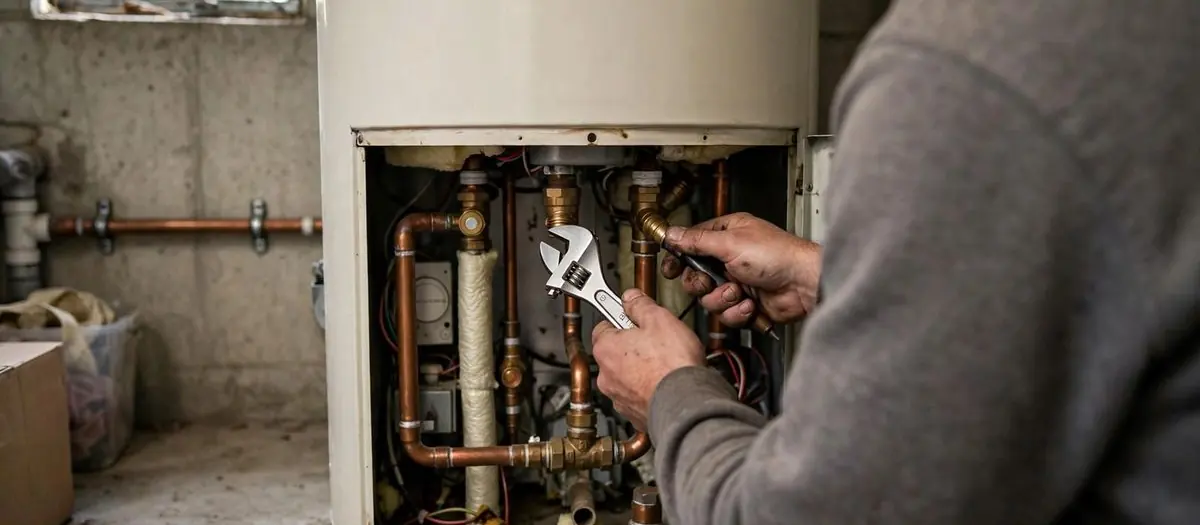
The gas control valve sits at the bottom of the tank. It regulates gas to the burner and the pilot, reads the temperature setting and shuts off if the safety sensor says the flame has gone out.
When the valve fails, the burner may not light, may light and then shut off or may fail to turn off at all. A valve that will not shut off is dangerous, and the heater should be turned off at the gas shutoff until a plumber has looked.
Other causes to rule out first
Thermocouple or flame sensor
A worn sensor makes the valve think the flame is out and shuts the gas. It is cheaper than a valve.
Dirty pilot or burner
Dust and debris can clog the burner ports or the pilot tube.
Draft or venting problem
A backdraft can blow out the flame. At Louisville's elevation of about 5,400 feet, venting and combustion air matter.
Tripped limit switch
Some units have a reset button that trips on overheating.
Why a pro should replace the valve
Replacing the valve means disconnecting the gas supply, draining part of the tank and testing every joint for leaks. A small gas leak is not always easy to smell, and an error here can be dangerous.
A valve on an old tank can also cost nearly as much as a new heater. If your tank is near the end of its life, see water heater replacement to compare.
What the repair visit looks like
A plumber checks the pilot, the thermocouple, the venting and the valve in that order. If the valve has failed, we quote the part and labor against a new heater before any work begins.
After the repair, we check for gas leaks with a detector or a soap solution and confirm the burner flame is steady and blue.
Questions to ask before you pay for a valve
Ask the plumber to test the thermocouple and the pilot first, since those cost less. Ask for the heater's age, because a valve on a tank over ten years old may not be a good use of money.
Ask what leak testing is included. A good repair ends with a check of every gas joint and a look at the burner flame.
Carbon monoxide and combustion safety
Gas appliances make carbon monoxide if they burn poorly. A carbon monoxide alarm on every level of the house is the right backstop, and it should be tested on a schedule.
If an alarm sounds, leave and call 911. Do not stay to find the cause. A plumber can inspect the appliance after the house has been cleared.
Gas heater symptoms and likely cause
| Symptom | Likely cause | Who fixes it |
|---|---|---|
| Pilot will not light | Pilot tube, valve or no gas | Plumber |
| Pilot lights, burner will not | Thermocouple or valve | Plumber |
| Burner will not shut off | Failed valve, a safety issue | Plumber now |
| Yellow, lazy flame | Dirty burner or venting | Plumber |
After the repair: what to watch
In the first days after a valve replacement, check that the burner lights promptly and the flame is steady and blue. Smell around the heater for gas, and check the pilot or igniter operation.
If anything seems off, shut the gas to the heater and call us. A repair should leave you with confidence, and a doubt is a reason for a return visit.
Gas heater calls come from Louisville, from Lafayette and from Broomfield, and the safety rules are the same in each town.
According to City of Louisville Building Safety guidance: see the local note above.
Louisville permits and gas work
The City of Louisville's Building Safety division lists replacing a water heater as needing a permit, and its phone number is (303) 335-4584. A repair of a part within an existing heater is a different category, so ask Building Safety how it treats yours.
The City adopted the 2024 International Plumbing Code effective December 6, 2025. Gas piping and venting are verified by the inspector. For gas smells, call 911 and your gas utility first.
Questions we hear most
The pilot will not stay lit with a new thermocouple, the burner does not respond to the thermostat or the burner will not shut off. A plumber tests it.
We do not advise it. Gas connections and leak testing are work for a licensed plumber.
Prices vary by brand and age. We quote both so you can compare before work starts.
Yes. Manufacturers give instructions for high elevation, and Louisville sits at about 5,400 feet. We check the setup.
Replacing a water heater needs one. Call Building Safety at (303) 335-4584 about repairs.
A worn thermocouple, a draft or a dirty pilot are common causes. A venting problem is the one that most needs a professional look.
Stuck on water heater gas valve? A plumber can look at it in person, any hour.