When the disposal and the sink both quit
Garbage disposal repair covers jams, motors that hum without turning, leaks at the flange or the body, and the clogs that often come with them. A disposal is a small machine under constant use, so it wears.
The emergency line is open 24/7. We tell you whether a repair or a new disposal makes more sense.
A sink that will not drain with the disposal running needs drain cleaning, and a new kitchen layout belongs with plumbing installation. We service disposals in Lafayette kitchens as well.
Disposal stuck or leaking? Do this first
Never put a hand into a disposal, even when it is off.
- Turn the switch off and, if you can, unplug it or shut the breaker.
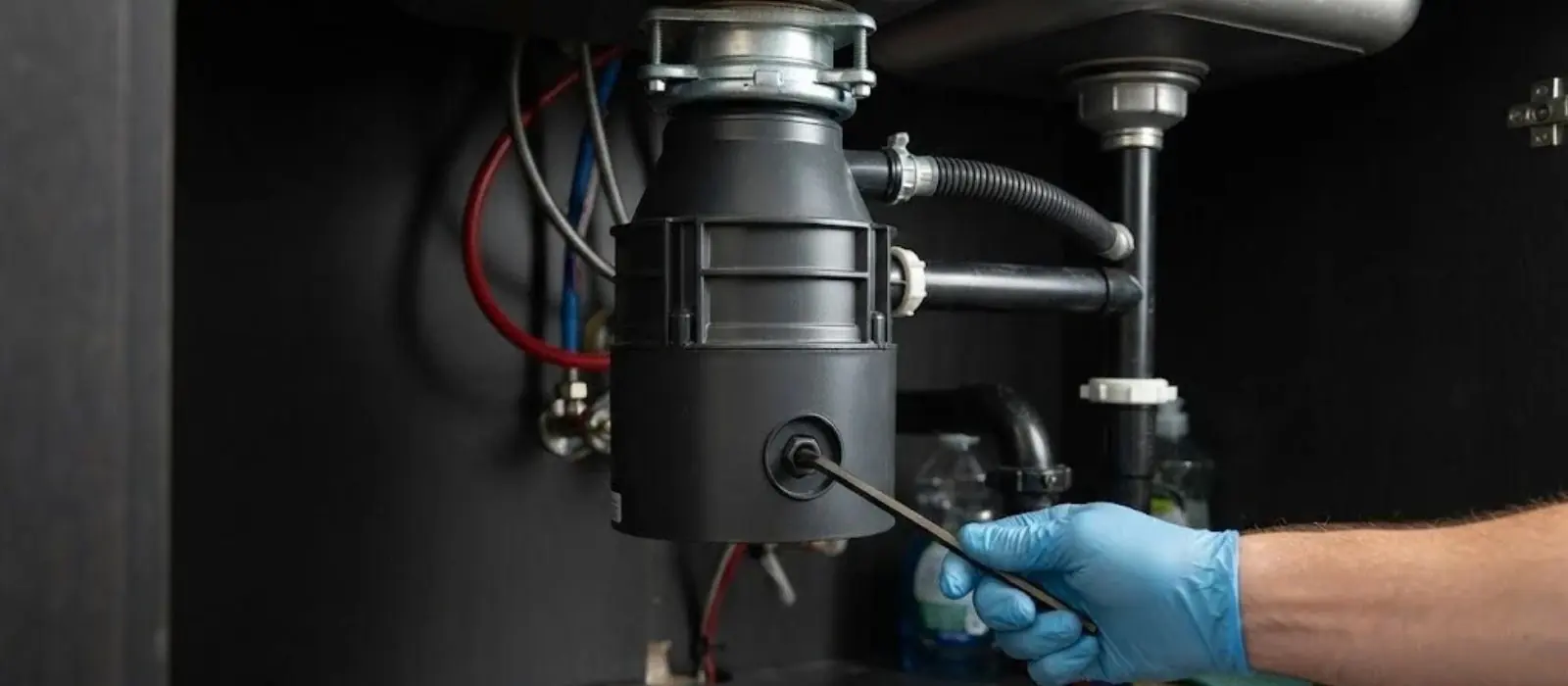
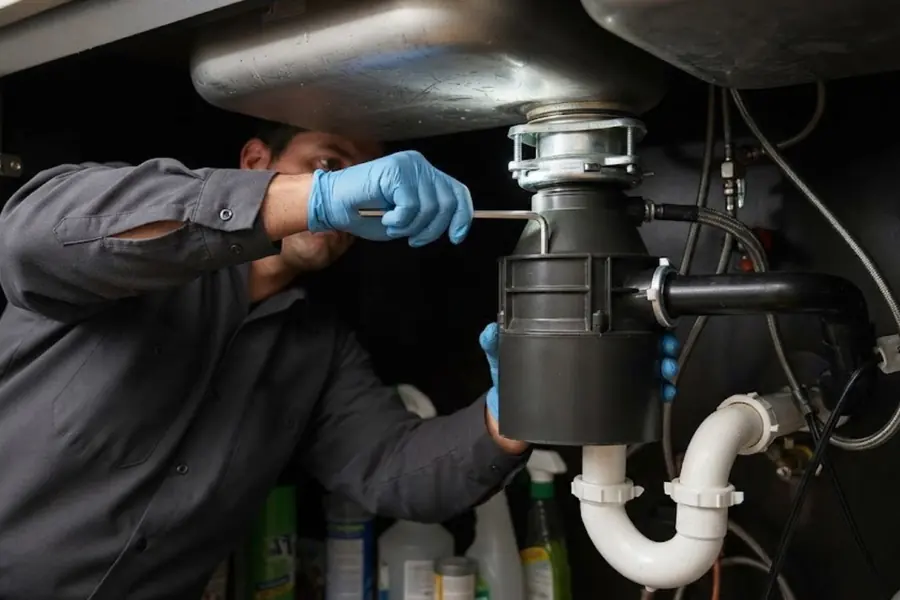
- Look under the unit for a hex socket in the center of the bottom. A hex key turned back and forth can free a jam.
- Press the red reset button on the bottom of the unit once the motor has cooled.
- If water leaks from the body, stop using the sink and place a bucket under it.
- If the sink is full, do not run more water. Call us.
Caring for a disposal so it lasts
Run cold water while the disposal works and for about fifteen seconds after. Cold water keeps grease solid so it can be chopped and flushed through the trap rather than coating the pipe.
Cut large scraps small and feed them gradually. Never put in bones, fruit pits, glass or non-food items. A disposal is not a trash can, and the blades and the pipe behind it show it.
Odors and slow draining
A smell from the sink is usually food film on the splash guard or the drain wall. Scrubbing the rubber baffle and running ice and citrus peel through the unit helps.
A slow drain with the disposal running is a different story. That points to a clog or a partial blockage downstream, which cabling or jetting clears.
What the symptom means
Humming, no spinning
A jam, or a seized motor if freeing the jam does not help.
Nothing at all
A tripped reset button, a dead outlet or a failed motor.
Leak at the top
A loose or worn flange seal.
Leak from the body
A cracked housing. The unit must be replaced.
What not to put down a disposal
Grease, coffee grounds in quantity, pasta, rice and fibrous scraps such as celery and corn husks are common causes of jams and clogs. Grease cools in the drain and coats the pipe, and the pipe narrows until the sink will not clear.
If the sink drains slowly even when the disposal runs, the clog may be past the trap. Our drain cleaning page covers how we clear kitchen lines, and a repeating clog is a reason to camera the pipe.
Repair or replace
| Condition | Repair | Replace |
|---|---|---|
| Jam, motor still good | Free the jam, test | Not needed |
| Motor hums and will not turn | Possible | Often replace |
| Leak at the flange | Reseal | Only if corroded |
| Leak from the body | Not repairable | Replace |
What affects the price of garbage disposal repair
A clear price for garbage disposal repair comes before work starts.
Insurance rarely covers a worn disposal. Want a real number for garbage disposal repair? Call (303) 552-3896.
Kitchen sink out of order?
Call the 24/7 line and tell us whether it hums, leaks or both.
Sources: general plumbing guidelines, and the City of Louisville construction detail sheet on who owns the sewer line.
Questions we hear most
Yes. A jammed disposal and a full sink is the kind of kitchen problem that cannot wait. The line is staffed through the night and on weekends.
Yes, with power off. Turn the key back and forth, then reset the unit. Never reach inside.
It is jammed or the motor has seized. Freeing the jam usually fixes the first.
Small amounts are fine, though they build up in the drain. Most plumbers suggest the trash.
Many last about 8 to 15 years, depending on use. A leak from the body means replacement.
Yes. We remove the old unit, mount the new one and test the drain and the connections.
Describe your garbage disposal repair problem to a plumber at any hour.