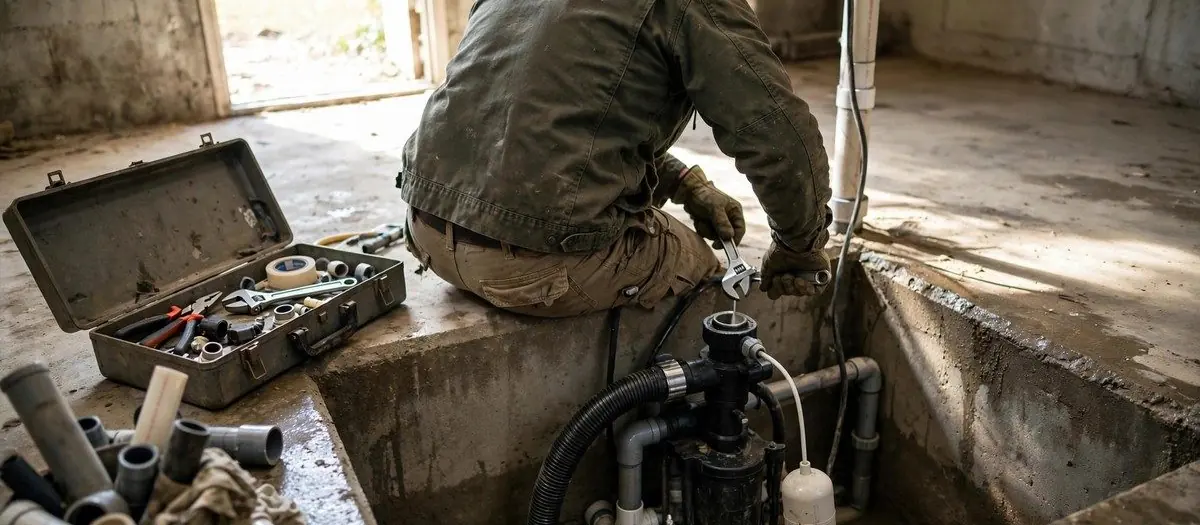
A sump pump is the last line of defense
A sump pump sits in a pit in the lowest part of a basement or crawlspace. When groundwater fills the pit, a float switch starts the pump and sends water outside through a discharge pipe.
When it fails, the basement is the first to know. The 24/7 line is open. If the water is already rising, start with the steps below.
If the basement keeps taking on water, see basement waterproofing for the larger picture, and rule out a plumbing source with leak detection. We service pumps in Broomfield too.
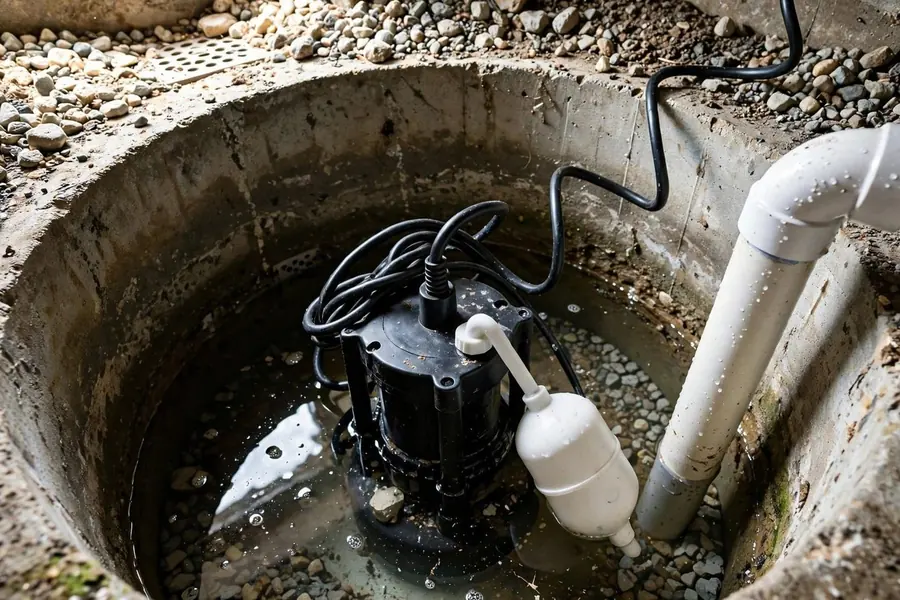
Pump not working and water rising? Do this
Water and electricity do not mix.
- Check the breaker and the plug first. A tripped breaker is a common cause.
- Lift the float with a stick. If the pump starts, the float is stuck or tangled.
- If the pump runs but does not move water, the discharge line may be frozen or blocked outside.
- Do not stand in water to touch any electrical panel or outlet.
- Move belongings to higher ground and call us.
Test your pump before the storm
Pour a bucket of water into the pit and watch. The float should rise, the pump should start and the water should drop and stop at the right level. If it hums without moving water, or does not start, call before the next heavy rain.
Clean the pit once a year, check the discharge outlet for ice and debris and make sure the check valve is not clogged. These ten minutes catch many failures.
Where the water should go
The discharge pipe should carry water well away from the foundation and not toward a neighbor. Sending sump water into the sanitary sewer is generally a problem because it overloads the system, so ask the City what is allowed.
In winter, make sure the outlet does not freeze closed. A discharge that ices up can force water back into the pit.
Common reasons a sump pump fails
Stuck float switch
The float jams against the wall of the pit or on debris.
Failed motor
Pumps wear out, and a long run during a storm can finish an old unit.
Frozen or blocked discharge
A line that is clogged with ice or dirt backs water into the pit.
Power loss
A storm can cut power at the same moment the pit fills. A battery backup solves this.
Where the water comes from in Louisville
The Colorado Geological Survey calls expansive soil Colorado's most significant geologic hazard and lists cracked basement floors and heaved slabs as signs of it. Cracks give water a path into a basement, so a pit that fills more often than it used to deserves a closer look.
We do not guess about your lot. We look at the pit, the discharge and the history you tell us. If a pump runs constantly, the answer may be a drainage fix outside, which our basement waterproofing page explains.
Pump types
| Type | Good for | Watch for |
|---|---|---|
| Submersible | Most basement pits, quiet and compact | Motor life under heavy use |
| Pedestal | Shallow pits and easy service | Louder, motor above the water |
| Battery backup | Storms and outages | Battery replacement every few years |
| Water-powered backup | Homes with good municipal pressure | Uses water, and local rules apply |
What affects the price of sump pump work
A clear price for sump pump comes before work starts.
Water damage from a failed pump is often excluded unless you carry water backup coverage. Check your policy. Want a real number for sump pump? Call (303) 552-3896.
Pump quiet and the pit full?
Call the 24/7 line and tell us what you see.
Sources: the Colorado Geological Survey, according to which expansive soil is the state's most significant geologic hazard.
Questions we hear most
Yes. Pits fill during storms, which often come at night. The emergency line is staffed around the clock for pumps that fail.
Often only with a water backup endorsement. Read your policy and ask your agent.
Many last about 7 to 10 years, depending on how often they run. Test yours each spring by pouring water into the pit.
If your basement has flooded before, or you finish it, a backup is wise. Power often fails during the storms that fill the pit.
Away from the foundation, and not into the sanitary sewer. We check the outlet during every visit.
A high water table, a stuck float or a failed check valve can cause it. We find out which.
Describe your sump pump problem to a plumber at any hour.