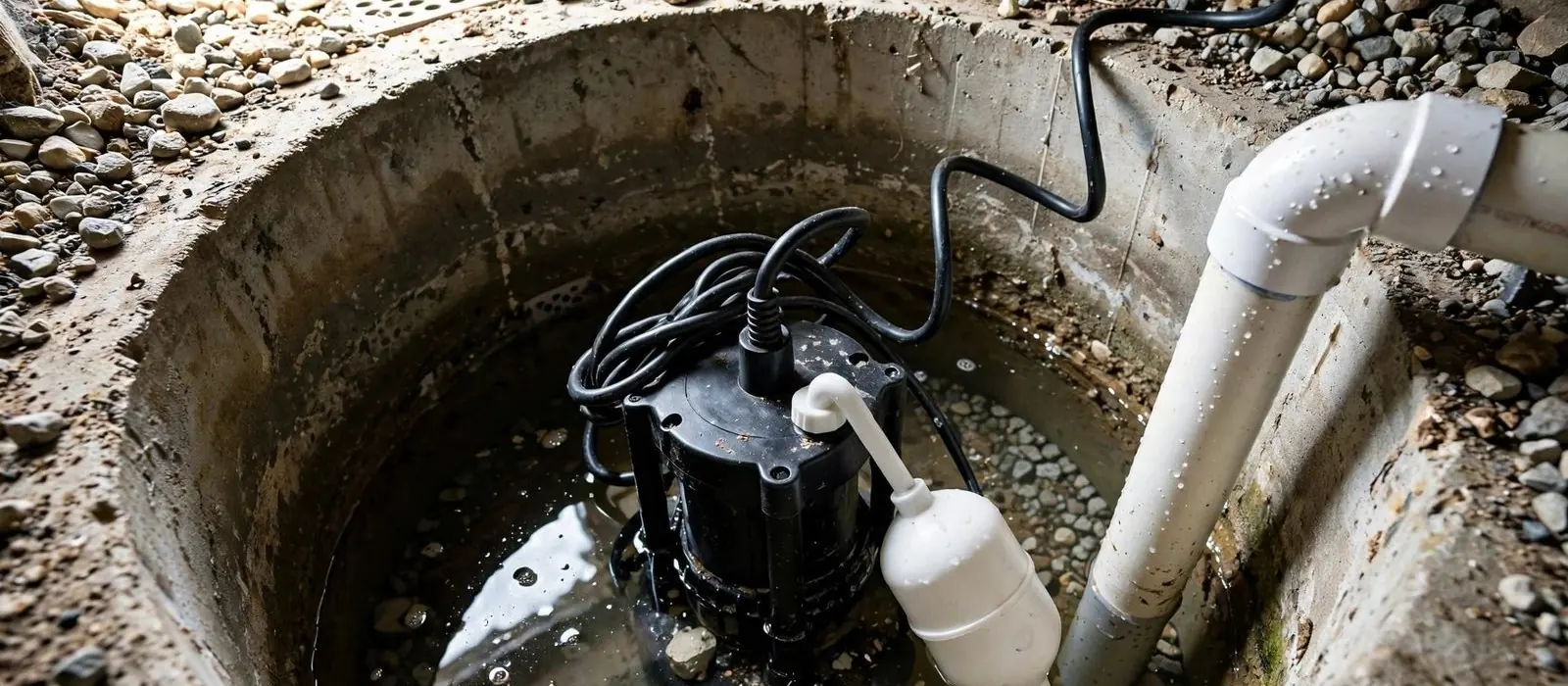
What the float does
A float switch rises with the water in the pit. At a set height it closes a circuit and starts the pump. When the water drops, the float falls and the pump stops.
There are two common types. A tethered float on a short cable swings on the end of a tether. A vertical float slides on a rod. Either can snag on the pit wall, the discharge pipe or its own cord.
Water rising in the pit? Test the float now
Unplug the pump before you touch anything in the pit.
- Check that the pump is plugged into a working outlet and the breaker has not tripped.
- Lift the float by hand while the pump is plugged in and see whether the pump starts.
- If it starts, the float was stuck. Move the pump so the float has room.
- If it does not, the switch or the pump has failed. Call us.
- Do not stand in water to reach an outlet or panel.
Signs of a float problem
Pump never starts
The float is stuck down, tangled or broken.
Pump runs nonstop
The float is stuck up, or a failed switch will not turn off.
Short cycling
The pit is too small or the check valve is leaking back.
Pump hums with no water movement
A stuck impeller or a failed motor, not a float problem.
Repair or replace
A float switch is a replaceable part on many pumps. On some units it is integrated and the whole pump must be replaced. If the pump is old, a new one with a fresh switch is often the better investment.
A battery backup protects against power loss during storms. See sump pump repair and installation for how we set one up.
Maintenance that prevents float trouble
Clean the pit once a year. Remove silt and debris that might jam the float. Check that the discharge pipe is clear and not frozen in winter.
Test the pump each spring by pouring a bucket of water into the pit. If the basement has had water, see basement waterproofing for the bigger picture.
Check valves and discharge
A check valve on the discharge pipe stops water from running back into the pit after the pump stops. A failed valve makes the pump short cycle, which looks like a float problem but is not.
Look for a clunk or a hum right after the pump shuts off. That sound is often the water falling back into the pit.
Pit size and float room
A pit that is too small makes the pump cycle often. A float that touches the wall or the cord will stick. Check that the pump sits level and that the float has clear space to swing.
A pump that sits on soft silt can tilt. A solid base prevents that and extends pump life.
When to replace the pump
If the pump is more than seven to ten years old, rattles, runs hot or is rusted, replace it. A new pump with a fresh float is cheaper than a flooded basement.
We can also add a high-water alarm so you know when the pit is filling too fast.
Float problems and fixes
| Symptom | Likely cause | Fix |
|---|---|---|
| Pump will not start | Float stuck down or tangled | Free it, test |
| Pump never stops | Float stuck up or failed switch | Replace the switch |
| Cycles on and off fast | Check valve or small pit | Replace the valve |
| Hums, no water moves | Impeller or motor problem | Replace the pump |
Alarms and monitoring
A high-water alarm costs little and gives you a warning before the pit overflows. Some models send a message to your phone, which helps if you travel.
Combine an alarm with a battery backup. The two together turn a basement flood into an inconvenience.
We service pumps in Lafayette and Broomfield basements as well, and spring is the busy season.
According to Colorado Geological Survey: see the local note above.
Soils and basements along the Front Range
The Colorado Geological Survey calls expansive soil Colorado's most significant geologic hazard. It notes that swelling can disrupt pipelines and sewer lines and lists cracked basement floors and heaved slabs among the signs.
We do not diagnose your soil. If your pit fills more often than it used to, or the basement floor has new cracks, we explain what we see and suggest a specialist if the issue is structural.
Questions we hear most
A stuck float, a tripped breaker, a dead outlet or a failed motor. Lift the float by hand to test.
A float stuck up, a high water table or a failed check valve. We find out which.
On many pumps, yes. On integrated units the whole pump is replaced.
Each spring, and before heavy storms. Pour water into the pit and watch the cycle.
The Colorado Geological Survey says expansive soil can crack basement floors and disrupt pipelines. Not every wet basement comes from it.
If your basement has flooded before, or you have finished it, a backup is wise.
Stuck on sump pump float repair? A plumber can look at it in person, any hour.