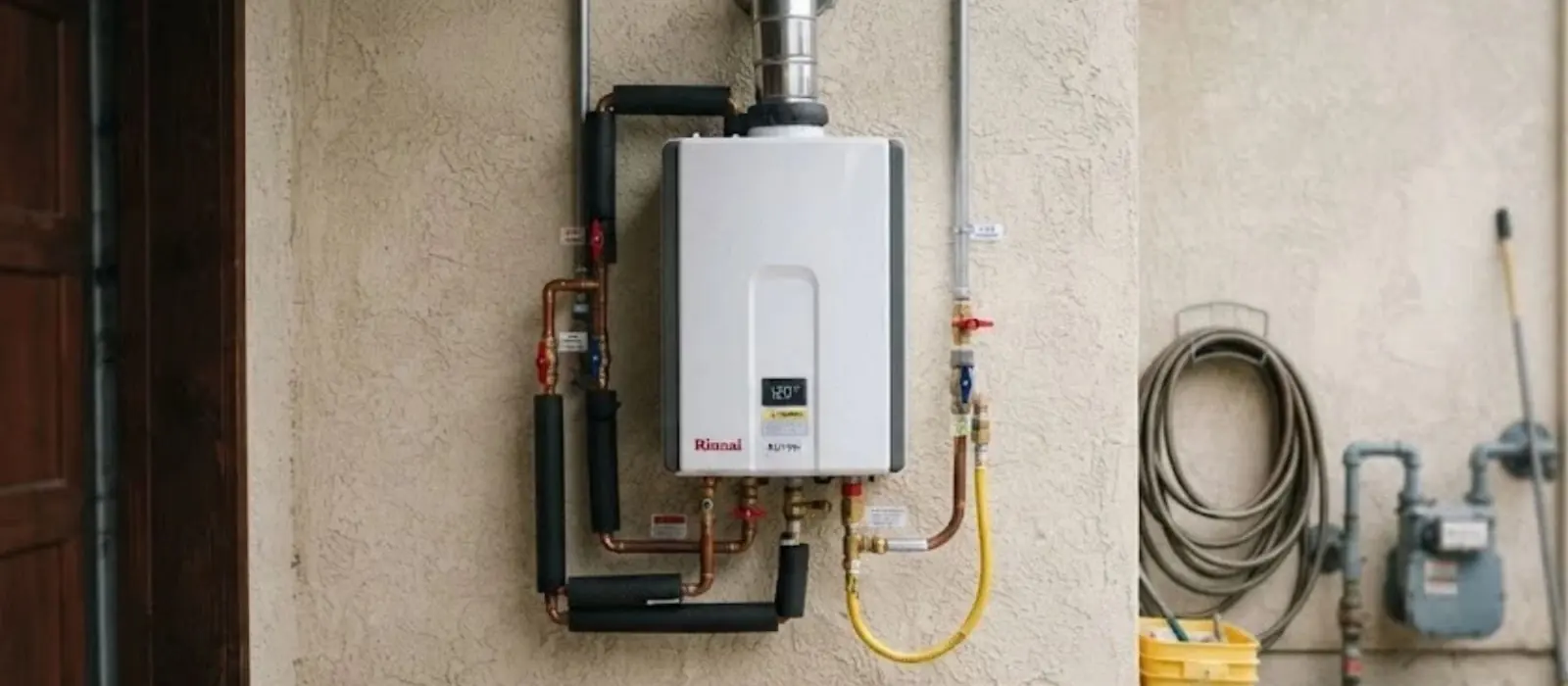
Why a tankless heater still makes you wait
A tankless unit heats water quickly, but it cannot warm the pipe between itself and a faraway sink. When you open a tap, the cold water standing in that pipe has to come out first. The longer the run, the longer the wait.
A short draw, such as washing your hands, can also leave the unit cycling on and off. Some units fire only above a minimum flow, so a trickle may go lukewarm.
Ways to shorten the wait
Dedicated return line
A pump pushes water from the far fixture back to the heater through a separate line. Hot water is always near the tap.
Crossover valve
Uses the cold line as a return. Cheaper to add, but the cold tap runs warm at times.
Built-in recirculation
Some tankless models include a small buffer tank and pump. Check your model.
Timer or demand control
Runs the pump only at set hours or when you press a button, which saves energy.
Recirculation options compared
| Option | Benefit | Trade-off |
|---|---|---|
| Always-on pump | Hot water instantly | More energy and pump wear |
| Timer | Hot water during busy hours | Wait outside the schedule |
| Demand button | Lowest energy use | You press it and wait briefly |
| Crossover valve | No new return line | Cold tap warm, and water temperature mixes |
What it takes to install
A dedicated return line is easiest in new construction or during a remodel when the walls are open. In an existing house, a crossover valve under the farthest sink is usually the practical choice.
Our tankless water heater page covers sizing and venting, and our water heater installation page covers permits and placement.
Does it waste energy?
An always-on loop keeps water moving and loses heat through the pipes, so it uses more gas or electricity. A timer or a demand control trims that. Insulating the hot pipe helps too.
You also save the water that would go down the drain while you wait. Which saving is bigger depends on your house, and we would rather explain that than promise a number.
Questions to ask the installer
Ask whether your model supports recirculation, which kind of pump control is offered and where the return line will run. Ask how the system affects the warranty and whether the pump has a timer.
Ask also about pipe insulation. A recirculating loop loses heat quickly through bare pipe, and a few feet of foam insulation make a visible difference.
Signs recirculation may help
Not every house needs it.
Long wait at one bathroom
The farthest fixture takes a long time to get hot.
Lukewarm sandwich
Hot, then cold, then hot again during a short draw.
Heater far from the kitchen
A long trunk line holds a lot of cold water.
Wasted water
You run the tap down the drain while you wait.
Maintenance for recirculation systems
A recirculation pump has moving parts. Check it once a year, and flush the heat exchanger on the schedule in the manual. Scale and recirculation together can reduce flow and strain the pump.
A small filter or screen at the pump protects it. Ask the installer to show you where it is and how to clean it.
A word about cost
A crossover valve is the least expensive way in, and a dedicated return line the most expensive. A pump with a timer sits between them. We would rather scope your house than guess at a number.
Ask for the price of the pump, the valve, the controls and any drywall repair separately. It is easy to compare bids when each line is clear.
We set up recirculation for homes in Superior and Broomfield, where longer pipe runs in newer subdivisions make the wait worse.
According to the City of Louisville 2026 Annual Water Quality Report and Building Safety guidance: see the local note above.
Louisville requirements for a tankless project
The City of Louisville's Building Safety division lists replacing a water heater as work that needs a permit, and its phone number is (303) 335-4584. The City adopted the 2024 International Plumbing Code effective December 6, 2025, and the inspector confirms venting and gas piping against it.
The City's 2026 water quality report names chlorine as the disinfectant and lists no hardness figure. Tankless heat exchangers scale, so test your tap and flush the unit as the manufacturer advises.
Questions we hear most
No. Many homes with short pipe runs do fine without it. It helps when the heater is far from a bathroom or kitchen.
Often yes, using a crossover valve or a return line. Check that your unit supports it.
An always-on loop can, because pipes lose heat. A timer or a demand button reduces that.
The City of Louisville lists replacing a water heater as needing a permit. Call Building Safety at (303) 335-4584.
The City's report does not list a hardness figure, so test your tap. Scale in a heat exchanger is common and is the reason for yearly flushing.
Yes. Colder incoming water and colder pipes make the wait longer and may reduce the unit's flow.
Stuck on tankless recirculation? A plumber can look at it in person, any hour.